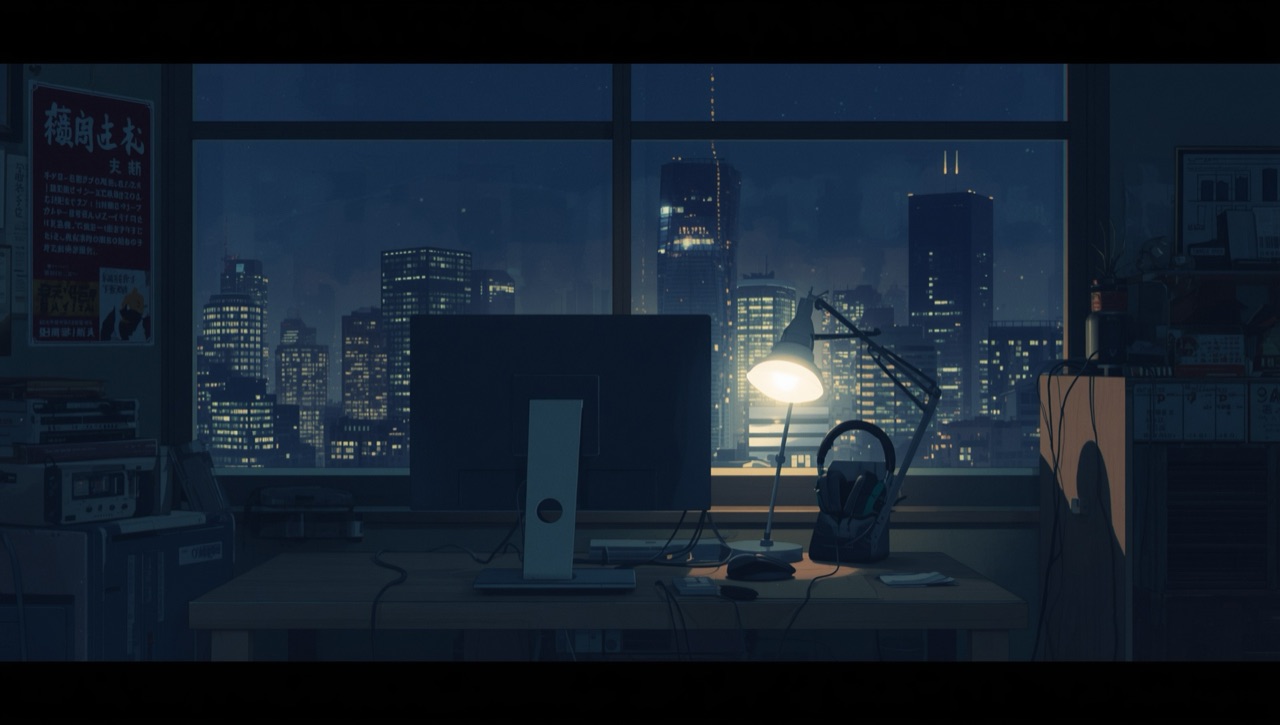
Programmers like lofi for the same reasons it works for studying: there are no lyrics to compete with the words and symbols in your head, the tempo barely changes, and the soft texture covers background noise without demanding attention. The trick is matching the music to the kind of work: steadier and darker for deep focus, familiar and repetitive for debugging, a bit more groove for the routine parts. Our lofi for coding room is made for exactly this.
Why it fits code so well
Code is language. Reading and writing code uses the same verbal working memory that lyrics pull on. A 2023 study found that songs with lyrics hurt reading comprehension and memory, while lofi instrumentals left them about where they were in silence. We went through what that research found.
Nothing surprises you. A lofi track at 75 beats per minute stays at 75 beats per minute. No drop, no key change, no chorus that makes you look up.
It masks the room. Open offices, flatmates, traffic: a low bed of soft drums and vinyl hiss covers irregular noise, which is more distracting than steady sound.
It becomes a cue. Put the same music on every time you start work and after a while it helps you start. That's habit, not magic, but it works.
What to play for each kind of session
Deep work: architecture, hard problems, new code
You want the least interesting music possible. Steady, dark, few melodies. This is what the Late Night Coding room is for: just over two hours of the steadiest tracks in our catalog.
Debugging
Debugging is anxious work, and novelty makes it worse. Play something you already know: the same short playlist on repeat is fine, even good. Turn on repeat in the player and let a handful of tracks loop.
Dynamic Depths, lofi by Neural Rhythms
Resolved Rhythms, lofi by Neural Rhythms
The boring parts: reviews, tickets, refactoring, email
Here a bit more melody helps keep you going. Lofi jazz has more swing and more tune, and it's where Mellow Mosaic lives.
Late at night
When it's past midnight and you're still at it, go slower and softer. The sleep room doubles as a wind-down room: when you've finished the last commit, it's already the right music.
Five habits that make it work better
- Low volume. You should be able to hear someone say your name.
- One playlist per session. Picking tracks is context switching.
- Timebox with the music. Our player's sleep timer (the moon icon) fades the music out after 30, 45 or 60 minutes: a gentle signal to stand up.
- Headphones for focus, speakers for the grind. Closed headphones help most in noisy rooms.
- Silence for the hardest ten minutes. When you need to hold a whole system in your head, silence still wins. Turn the music back on when you're typing again.
Streaming your code?
If you stream programming on Twitch or YouTube, the whole catalog is free to use with a credit line. The details are on the free music page, and if YouTube ever shows a claim on a coding VOD, send it to us and we'll help you answer it.
Written by Suman Kumar with AI help and checked before publishing. Numbers about our own music come from our Spotify for Artists and DistroKid exports; other sources are linked in the post.