The sound, in six ingredients
Almost every lofi track mixes the same handful of things:
- A slow, steady tempo. Usually somewhere around 60 to 90 beats per minute, about the pace of a relaxed walk.
- Swung, soft drums. A muted kick, a dusty snare and hi-hats that land slightly behind the beat, so the groove feels lazy rather than tight.
- Jazz chords. Major sevenths, minor ninths and other "colourful" chords on electric piano, guitar or keys. They sound warm and a little wistful.
- Texture on purpose. Vinyl crackle, tape hiss, rain or café noise. The "imperfections" are part of the instrument.
- Short loops. A two- or four-bar idea that repeats with small changes, so nothing surprises you.
- No lyrics, or almost none. A voice sample here and there, but rarely a singer.
Put together, these make music that sits in the background without asking for attention, which is exactly why people put it on while they do something else.
Where it came from
"Lo-fi" started as a description of home recordings made on cheap equipment. The term was popularised in the late 1980s by a radio show on WFMU in New Jersey, and later became a style people chose on purpose.
Lofi hip-hop grew out of the 2000s beat scene. Producers like J Dilla and Madlib made beats that swung loosely and sounded sampled from worn records. In Japan, Nujabes blended hip-hop with jazz, and his music for the anime Samurai Champloo (2004) became a touchstone for the whole genre.
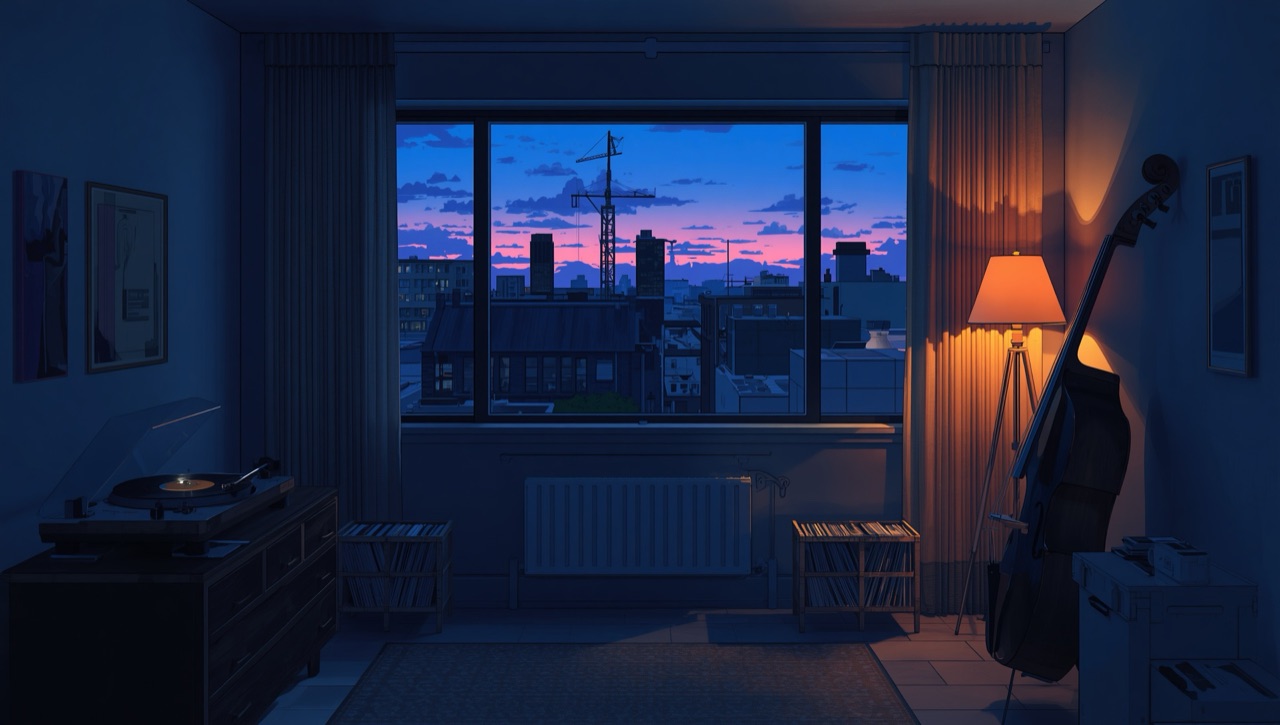
In February 2017 a YouTube channel then called ChilledCow, now Lofi Girl, started a 24/7 livestream of "lofi hip hop radio - beats to relax/study to", with an animated girl studying at her desk. It became one of the most-watched streams on YouTube and set the look people still associate with lofi: a window, a cat, a desk lamp, a rainy city. During the 2020 lockdowns, when millions of people were studying and working from home, lofi streams grew even more.
Why people listen to it
Most people don't put lofi on to listen closely. They put it on to:
- Study and work. No lyrics means nothing competes with the words you're reading. A 2023 study found students did about as well with lofi as in silence, while songs with lyrics hurt their scores. We wrote up what the research says.
- Relax. The slow tempo and soft sound are calming.
- Fall asleep. The slowest tracks work as gentle background noise.
- Set a mood. Rain, a café, a city at night: lofi comes with scenery.
Lofi, chillhop, jazzhop: aren't they the same?
Close relatives. "Chillhop" usually means cleaner, brighter tracks with more groove; "jazzhop" leans harder on jazz samples and chords; "lofi" is the umbrella most people search for. The line between them is blurry, and most playlists mix all three.
Lofi made with AI
Some of the lofi you hear now, including ours, is made with AI tools. Our catalog started in Suno, and every track is picked, named and released by one person. We say so openly on our about page. Whether it's made on a sampler or in a browser, the ingredients above are what make it lofi.
Where to start listening
Pick a room that matches what you're doing:
Or leave the radio on and let it choose.
Written by Suman Kumar with AI help and checked before publishing. Numbers about our own music come from our Spotify for Artists and DistroKid exports; other sources are linked in the post.