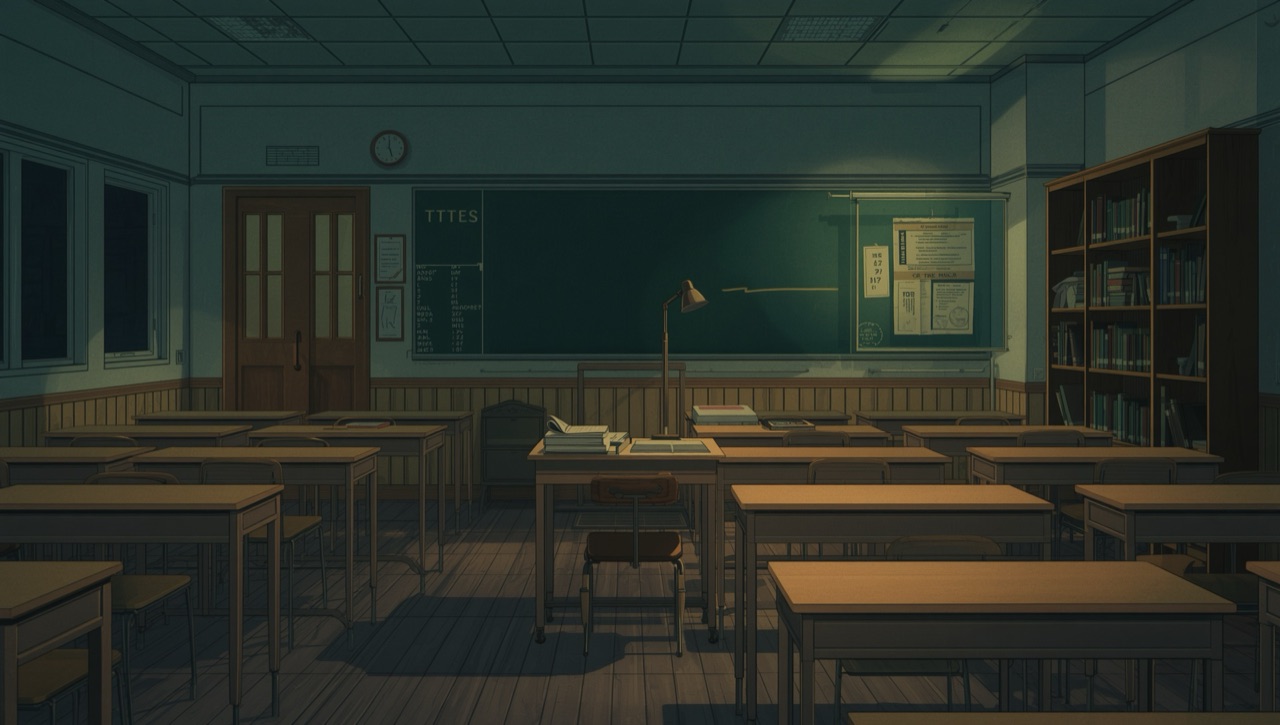
Lofi can work well in a classroom during independent work: drawing, practice problems, tidying up, quiet project time. Keep it instrumental, keep the volume just above the room's own noise, and switch it off for reading, tests and anything that needs close listening. Many teachers also use a set length of music as a gentle timer for tasks and transitions.
When music helps, and when it doesn't
Good times for background lofi:
- Independent practice: worksheets, maths problems, art.
- Group work, at a very low level, to soften the room.
- Arrival, pack-up and transitions.
- Calm-down time after a break.
Better without music:
- Reading and writing. Words in songs interfere with reading, and even instrumental music takes a little attention. A 2023 study found that songs with lyrics hurt reading comprehension, while lofi instrumentals left it about the same. The research in plain words.
- Tests and quizzes. Some students will find any sound distracting.
- Direct instruction and discussion.
What to play
- No lyrics. This is the most important rule.
- Steady and soft. Avoid tracks with drops, sudden loud parts or busy melodies.
- Nothing too familiar. Lofi covers of pop songs make students hum the words in their heads.
- One long playlist. No stopping to pick the next track in front of the class.
- No ads. An ad breaking into a quiet room undoes the calm. Use a source that doesn't insert them.
Our Study Session room is instrumental and steady for over an hour and a half; morning lofi is brighter for art or tidy-up time.
How loud
Quieter than you think. The music should be just audible over the normal hum of the room, so students talking at a normal level can't hear it across the room. If you need to raise your voice over it, it's too loud.
Music as a timer
Music is a natural timer that doesn't need a clock face:
- "Work until the music stops." Our player's sleep timer (the moon icon) can stop the music after 15, 30 or 45 minutes with a gentle fade, instead of an alarm.
- One track for tidy-up. Most lofi tracks are two to four minutes long, a good length for packing away.
- Same music, same routine. Using the same room for the same activity each day becomes a cue: when it starts, students know what's expected.
Practical setup
- Speakers, not a laptop. Small laptop speakers distort when turned up; a small external speaker sounds better at low volume.
- Keep the screen off, or neutral. Busy visuals pull eyes away from the work. Our player works with the page in the background.
- Check your school's policy on streaming and websites before class.
Making a class video or project?
If students or teachers are making videos, podcasts or presentations, our tracks are free to use in them with a credit line: Music: Neural Rhythms · neuralrhythms.io. The details are on the free music page.
Written by Suman Kumar with AI help and checked before publishing. Numbers about our own music come from our Spotify for Artists and DistroKid exports; other sources are linked in the post.